

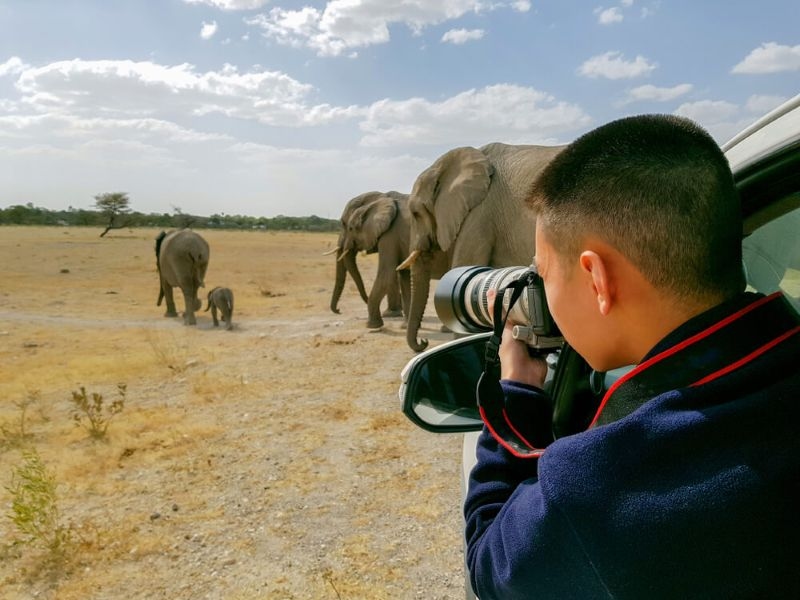
Locating a high-quality yet affordable camera for wildlife photography is a major concern for many beginners. However, even with a professional setup that costs thousands of dollars, capturing excellent images with Wildlife Photography Gear is quite easy, regardless of your budget. Many people have discovered that Nikon D500 Wildlife Photography makes it possible to capture amazing images without spending a lot of money. All you need is the camera body and a decent lens to capture amazing wildlife images.
The rise of used markets and the transition to mirrorless systems has created a goldmine for those seeking a Budget Wildlife Photography Camera. Older professional DSLR bodies still take incredible photos and offer build quality that cheap modern cameras cannot match. Choosing a used professional body allows for better weather sealing and faster autofocus systems, which are vital in the field.
Most wildlife subjects move quickly, so a camera that can keep up is essential. A Budget Wildlife Photography Camera must have a high burst rate to capture the exact moment a bird takes off or a deer jumps. Buying a few years behind the current curve saves money while providing tools that were once the industry standard for professionals.
Recommended Article: Wildlife Photography Tips for Stunning Nature Shots
Many experts still consider the Nikon D500 the peak of crop-sensor performance for wildlife photography. This camera features a 153-point autofocus system that covers almost the entire frame. This means the subject stays in focus even if it moves toward the edges of the image.
The sensor's crop factor effectively gives your lenses more reach. A 500mm lens acts like a 750mm lens on this body, which is a massive advantage when you cannot get close to an animal. This extra reach is why many bird photographers prefer this specific setup over more expensive full-frame options.
Selecting the Best Lens for Wildlife Photography usually involves a trade-off between price and maximum aperture. While a fixed 600mm f/4 lens is amazing, it costs more than a small car. For those on a budget, zoom lenses are the most practical and versatile choice for daily use.
A lens with a reach of at least 400mm is generally required to fill the frame with small subjects. Anything less usually results in heavy cropping, which reduces the overall quality of the final image. Looking for lenses with built-in vibration reduction will help tremendously when shooting handheld in the woods.
An honest Nikon 200-500mm Review shows that this lens is a heavy-duty worker for nature lovers. It maintains a constant f/5.6 aperture throughout the entire zoom range. This means your exposure settings do not need to change as you zoom in on a subject, simplifying the shooting process.
While the lens is somewhat large and heavy, the optical performance is hard to beat at this price point. It balances well on a tripod but can be used handheld by those who do not mind a bit of a workout. It is widely regarded as one of the best values in the entire Nikon lineup.
A Closer Look at This: Ultimate Camera Lens Guide for Sharper and Stunning Photos
Building out a Wildlife Photography Gear Budget requires more than just a camera and lens. Small accessories often make the difference between a successful trip and a frustrating one. Investing in a solid tripod or a comfortable backpack ensures that you stay in the field longer and capture better images.
Prioritizing the camera and lens is smart, but don't forget that a blurry photo from a cheap tripod is still blurry. Buying quality used accessories can help keep costs down while maintaining high standards. Focus on items that improve your comfort and the safety of your electronic equipment.
The quest for the Best Budget Telephoto Lens often leads traders to third-party manufacturers like Tamron or Sigma. These companies offer 150-600mm lenses that provide even more reach than the standard manufacturer options. These lenses are often lighter and include very modern features for a fraction of the cost.
Competition between these brands has driven quality up and prices down over the last decade. This is great news for anyone trying to build a professional-looking kit on a shoestring. Testing these lenses at a local shop can help you decide which one feels right in your hands before you buy.
Once you have your Budget Wildlife Photography Camera, setting it up correctly is the final step. Using "Back Button Focus" is a common trick pros use to separate the shutter button from the focus function. This allows you to track a moving animal without accidentally taking a photo before the moment is right.
Learning these technical basics will make your inexpensive gear perform like a million dollars. Practice in your backyard or at a local park with squirrels and common birds to build muscle memory. The more you know your gear, the less you have to think about it when a rare animal finally appears.
Learn More: Camera Gear for Beginners That Makes Photography Easy
Buying the Nikon D500 is a very good investment for someone interested in wildlife. It would be wise to pick the Best Budget Telephoto Lens while learning about the camera. Patience is key here; practice makes perfect when it comes to budget wildlife photography.
A used DSLR is great for nature photography because it was designed for professional use. These cameras are known for their longevity and optical viewfinder options, which many people prefer to electronic ones. Buying the used one will give you the option of getting better lenses.
When photographing small, fast-moving birds, a shutter speed of at least 1/2000 is usually required to freeze their wing motion. In lower light, you may have to increase your ISO to maintain this speed, but a sharp, grainy photo is always better than a blurry one.
Yes, a crop sensor provides an effective magnification boost to your lenses, making distant animals appear larger in the frame. For example, a 1.5x crop factor makes a 500mm lens equivalent to a 750mm lens. This is a significant advantage for wildlife photographers who need as much reach as possible.
It is recommended that you use either a monopod or a tripod when using heavy telephoto lenses to avoid fatigue and ensure no camera movement. Although modern stabilization works wonders, nothing beats having a sturdy platform for producing the sharpest photos of animals emerging from the bushes.
This content was created by AI